Month: January 2012

Justice Gableman Denies Recusal Motions Seeking to Force Him Off of Cases

Justice Michael Gableman on Friday denied motions by attorneys in three separate cases asking the Justice to recuse himself from pending cases. The parties sought his removal after it was determined that Justice Gableman received contingency fee representation from an attorney with a law firm that had cases pending before the Court. The three cases are Adams v. State, Ozanne v. Fitzgerald, and Clinard v. Brennan.

In denying the motions, Justice Gableman explained that under Wisconsin law a Justice must recuse him or herself if they cannot “act in a fair and impartial manner” and by participating in the case they would “give the appearance that they were not able to act in a fair and impartial manner.”

Wisconsin law also provides that only the Justice him or herself can determine whether to decide whether to participate in the case and that other Justices on the bench cannot remove another Justice from a case.

Justice Gableman also cited U.S. Supreme Court Chief Justice John Roberts from an end of the year report on the judiciary in which the Chief Justice addresses recusal matters:

A “Justice…cannot withdraw from a case as a matter of convenience or simply to avoid controversy. Rather, each Justice has an obligation to the Court to be sure of the need to recuse before deciding to withdraw from a case.”[i]

Chief Justice Roberts further noted in the report that a judge “should not be swayed by partisan demands, public clamor or considerations of personal popularity or notoriety, nor be apprehensive of unjust criticism. Such concerns have no role to play in deciding a question of recusal.”

Justice Gableman determined that based on the law and the motions by the parties that “recusal is neither justified nor warranted.”


[i] See John G. Roberts, Jr. 2011 Year-End Report on the Federal Judiciary, available at http://www.uscourts.gov/Libraries/Statistics_PDFs/2011Year-EndReport.sflb.ashx.
Court Hears Oral Arguments in Collateral Source Rule Case

The Wisconsin Supreme Court heard oral arguments in an important case, Orlowski v. State Farm Mut. Ins. Co., 2009AP2848, which will determine whether the collateral source rule applies to underinsured motorist (UIM) policies.

The Wisconsin Supreme Court has explained that the “collateral source rule states that benefits an injured person receives from sources that have nothing to do with the tortfeasor may not be used to reduce the tortfeasor’s liability to the injured person.” Leitinger v. Dbart, Inc., 2007 WI 84, 736 N.W.2d 1 (2007). For example, in Leitinger, the Court held that the plaintiff was allowed to receive the full amount ($154,818.51) of his past medical expenses, even though the actual amount paid by the plaintiff’s health insurer was $111,394.73.

The plaintiff in Orlowski was injured in an automobile accident arising out of the negligence of an underinsured motorist. The plaintiff recovered the policy limit from the underinsured motorist’s liability carrier and then brought a claim under her UIM policy against State Farm Mutual Automobile Insurance Company.

The claim was submitted to arbitration under the terms of the UIM policy. The arbitration panel determined that the reasonable value of the medical services was $72,985.94. The arbitration panel also determined that the plaintiff’s health insurer only paid $11,498.55 in past medical expenses. The parties stipulated that the difference between the total amount billed ($72,985.94) by the medical providers and the amount actually paid ($11,498.55) by the plaintiff and her health insurer totaled $61,487.39. The $61,487.39 was due to insurance company write-offs or reductions, and therefore the plaintiff did not pay the full amount actually billed by the health care providers.

The arbitration panel ruled that the collateral source rule did not apply and therefore the plaintiff was not entitled to $61,487 that was not paid by the plaintiff or her health insurer due to write-offs or reductions.

The plaintiff then filed a petition with the circuit court seeking an order from the court allowing her to recover the $61,487.39 in written-off medical expenses. The circuit court reversed the arbitration panel’s decision and ruled that the plaintiff was legally entitled to collect the full reasonable value of medical expenses from the tortfeasor.

However, as noted by the Court of Appeals, that court in Heritage Mut. Ins. Co. v. Graser, 2002 WI App. 125, 254 Wis.2d 851, 647 N.W.2d 385 held that the collateral source rule does not apply in UIM cases and thus the written-off medical expenses are not recoverable under UIM coverage.

In certifying the case to the Wisconsin Supreme Court, the Court of Appeals concluded that it was unable reconcile its holding in Graser with State Farm’s insurance contract and with the collateral source rule.

The Court will issue a decision by the end of its term in July 2012.

This post was authored by Andrew Cook.

Daubert Comes to Wisconsin a Success

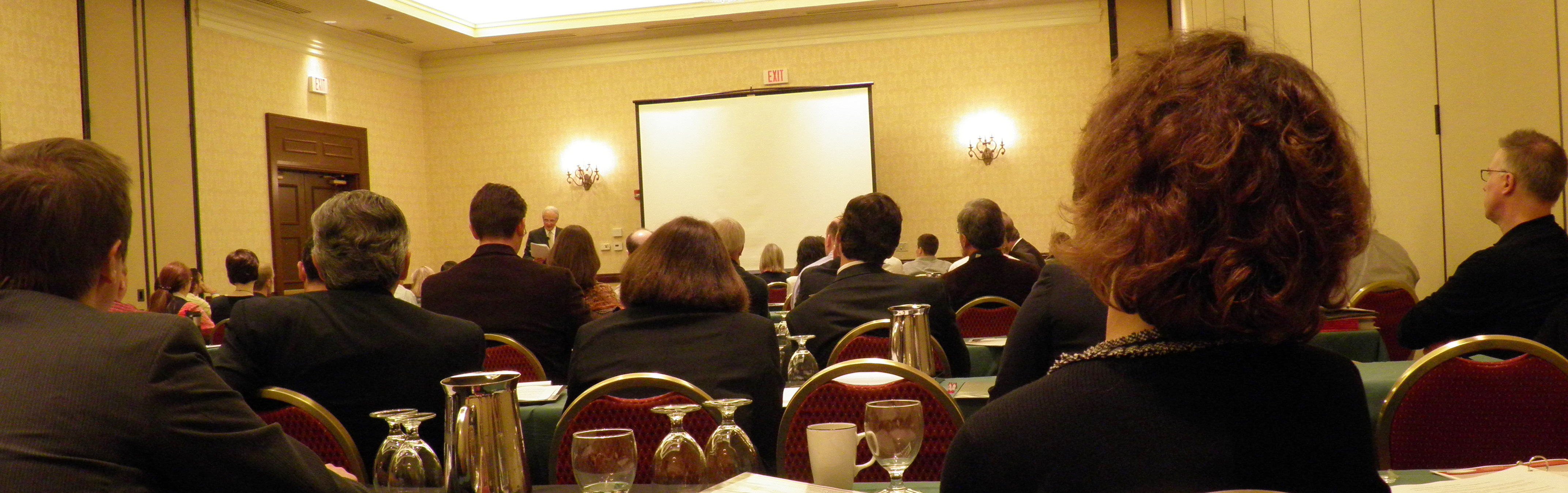
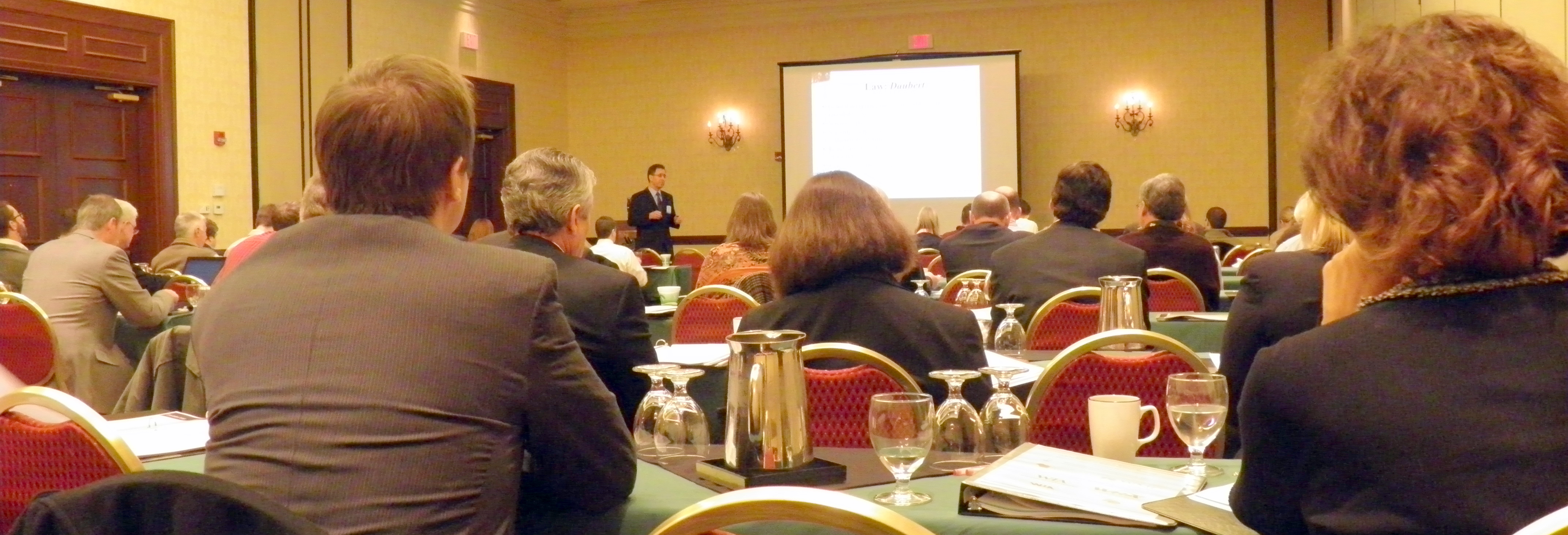
One of the most important pieces of legislation supported by the Wisconsin Civil Justice Council in 2011 was the adoption of the Daubert standards for the admission of expert opinion evidence, bringing Wisconsin in line with the entire federal system and a majority of states. A comprehensive understanding of decisions and trends from other jurisdictions will be critical for Wisconsin lawyers as the standards are implemented in Wisconsin. In an effort to educate the legal community on these important new standards, WCJC organized and hosted Daubert Comes to Wisconsin – A CLE Summit on Expert Opinion Evidence on January 11, 2012.

Attendees proclaimed the Summit a great success, applauding the high caliber speakers for their engaging presentations.

Ric Gass, of Gass Weber Mullins LLC, lead off with a discussion of how the Daubert standard improves the quality of scientific information presented to juries and why that is a good thing. Dan La Fave, of Whyte Hirschboeck Dudek, then gave attendees an introduction to the American Society for Testing and Materials (ASTM) standards, which included information on how to assess both your experts and those of the opposing party.

Daubert is not just for toxic tort or complex medical malpractice suits, it is relevant in all cases involving experts. Don Best and Ed Sarskas, of Michael Best & Friedrich LLP, provided an example of how Daubert is used in intellectual property cases.

After lunch, John Sear, of Bowman and Brooke, provided attendees with an overview of the case law since Daubert, and an overview of his recommended Daubert Checklist.

Judge Rudolph Randa of the U.S. District Court for the Eastern District of Wisconsin, who has written more Daubert decisions than any other judge in the Eastern District, then provided practical advice to attendees based on some of the cases he had dealt with. Judge Randa reminded attendees that it is their responsibility to educate the judges about their experts, but that judges must also educate themselves about expert evidence.

Crivello Carlson attorneys Sam Hall and Travis Rhoades provided an informative look at special issues related to medical evidence, and reviewed common fallacies to watch for.

The last presentation of the day was a joint effort by Michael Brennan and Brian Cahill of Gass Weber Mullins to provide attendees with resources they can use when dealing with experts in “soft science.”

All of the resource materials from the Summit are available on the WCJC website.

WCJC would like to thank the Wisconsin Defense Counsel (WDC), the Wisconsin Insurance Alliance (WIA), the Wisconsin Hospital Association (WHA), the Wisconsin Association of Manufacturers and Commerce (WMC), the Wisconsin Utilities Association (WUA), and the Wisconsin Electric Cooperative Association (WECA) for their support of Daubert Comes to Wisconsin.

Daubert Comes to Wisconsin

One of the most important pieces of legislation supported by the Wisconsin Civil Justice Council earlier this year was the adoption of the Daubert standards for the admission of expert opinion evidence, bringing Wisconsin in line with the entire federal system and a majority of states. A comprehensive understanding of decisions and trends from other jurisdictions will be critical for Wisconsin lawyers as the standards are implemented in Wisconsin. In an effort to educate the legal community on these important new standards, WCJC organized and hosted Daubert Comes to Wisconsin – A CLE Summit on Expert Opinion Evidence on January 11, 2012.

Materials from the Summit are available to download for educational purposes:

WCJC would like to thank the Wisconsin Defense Counsel (WDC), the Wisconsin Insurance Alliance (WIA), the Wisconsin Hospital Association (WHA), the Wisconsin Association of Manufacturers and Commerce (WMC), the Wisconsin Utilities Association (WUA), and the Wisconsin Electric Cooperative Association (WECA) for their support of the Daubert Comes to Wisconsin CLE Summit.

Business Magazine Explains the Need for Bill Eliminating Law Providing Convicted Felons Protected Class Status under WFEA

In Business magazine just issued its latest print edition and its cover story is an excellent article explaining why Wisconsin’s current law protecting convicted felons as a protected class under the Wisconsin Fair Employment Act (WFEA) is overly burdensome for employers. The article further discusses Assembly Bill 286/Senate Bill 207, which would alleviate this burden on employers by eliminating conviction felony records as a protected class under the WFEA.

In the article Madison Attorney Lori Lubinsky explains why the bill is needed:

“Overall, this legislation will give employers a very black-and-white backdrop that was once gray, and that’s always good from an employers’ perspective because there is more clarity.”

Another attorney, Christopher Banaszak, further points out why the legislation will help employers:

“One of the struggles you have as an employer under the current statute, with this substantially related language, is that you may have someone who commits a fairly serious crime but then you still have to go back through this analysis.”  

AB 286/SB 207 is a top priority for the Wisconsin Civil Justice Council. The bill has passed out of both the Assembly and Senate Labor Committees, and is available to be scheduled in both the Assembly and the Senate. WCJC is working diligently to ensure this bill is scheduled and passed into law during the upcoming floor period.

Venue Statute Tested in Recall Lawsuit

One of the major civil justice reforms passed by the Wisconsin Legislature and signed by Governor Walker in 2011, was 2011 Wisconsin Act 61, which modified Wisconsin’s venue statutes in cases where the sole defendant is the state, a state board or commission, or certain state officers, employees, or agents. The new law was recently utilized in Friends of Scott Walker v. The Government Accountability Board, which was filed in Waukesha County Circuit Court on December 15, 2011.

The complaint in the case sought a declaratory judgment from the court that the procedures of the Government Accountability Board, whereby the GAB accepts duplicative signatures on recall petitions, violates the Equal Protection clauses of the United States and Wisconsin constitutions, Article XIII, Section 12(7) of the Wisconsin Constitution, and Wisconsin law.

The case, which under previous law would have been venued in Dane County, was able to be filed in Waukesha County because of the statutory change passed in 2011 Wisconsin Act 61. The only defendants in the case were the GAB, and GAB officials in their official capacities, so the new law applied, allowing the plaintiffs to select appropriate venue.

On January 5th, Waukesha County Judge J. Mac Davis, agreeing with the plaintiffs, ruled that the GAB must take reasonable, affirmative steps to identify and strike duplicate, fictitious or unverifiable signatures from recall petitions.

This post was authored by Emily Kelchen of the Hamilton Consulting Group.